Looking an expert team?  +91-74286 23211
+91-74286 23211  sales@semreseller.com
  Mon-Fri 9:30 - 6:30
+91-74286 23211 sales@semreseller.com Mon-Fri 9:30 - 6:30
Mon-Fri 9:30 - 6:30
+91-74286 23211 sales@semreseller.com Mon-Fri 9:30 - 6:30 If you are among many to worry about Google removing the FAQ snippets without warning, you are in the right place. These FAQ or frequently asked questions rich results help for 10% and 31% growth on desktop and mobile click-through rates. They also help the web page go up two or three spaces on the SERP. But for many like you, they suddenly disappear because Google removes them, sending no warning on the Google Search Console.
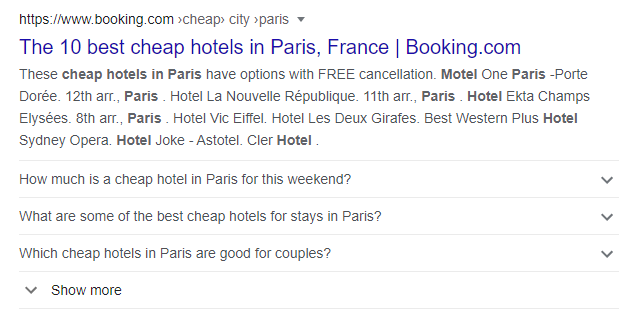
Image credit: Onely.com
In Google SEO Office-hours hangout, John Mueller, webmaster trend analyst at Google on July 23, 2021, answered why Google removed FAQ snippets from the site. He said that Google does not guarantee any rich results, and hence there is no need to provide any warning per se for result type search. But when sites use the right markup, they become eligible to show on the SERP. So check out FAQ-rich results, the right markup, and what else Mueller said about Google removing them.
Before knowing about FAQ-rich results, it is important to know about the difference between Q&A or question and answers and FAQs or frequently answered question pages. Q&A pages like Quora for users, StakeFlow for developers, and others are more dynamic as they have multiple answers for a single question. And even readers can vote on which offers the best and correct answer.
FAQ pages are essential for business or product websites as they answer repeated questions asked by customers. They save a lot of time and effort for the support teams to answer the same questions repeatedly. Many sites use it for promoting purposes by building brand awareness and comparing the product with other competitors. Also, as Mueller said, correct marking up of FAQs will help make them show on the SERP.
Knowing now about FAQ pages is, and before knowing FAQs Rich Results, it is essential to know what rich results are. For any search, Google displays the traditional ten blue links or the first ten web pages. But now Google is showing rich results, which are more than a link on the SERP. It is because they have more information that directly links to the answers in the search query. The user can now get a quick answer conveniently without searching for the answer going into the site. But for the detailed answer, they need to do thorough research through the web pages.
Having known FAQs and rich results of Google, it is time to know what FAQ rich results are. They are the FAQs links in the web page shown by Google as links on the SERP page. Since it is convenient for the users to click, it is desirable by all. It also helps to rank the pages two or three spaces above in the search results. But as Mueller said in the recent Google SEO Office-hours hangout, only correctly marked FAQ rich results will show high on SERP.
Hence having the above documentation and properties, it is easy to markup the FAQ page using JSOM-LD or Microdata to help the web page go two or three notches up on the Google search results.

Image credit: linkedin.com
Many get pained and feel punished if Google removes FAQ-rich results even without informing in the search console after taking a lot of effort and time. So, in the July 2021 Google SEO Office-hours hangout, Mueller answers in detail the question that includes.
The above facts and Mueller's views will surely help you understand why Google removes FAQ-rich search results. In a nutshell, you need to update your site to comply with the core Google updates and implement excellent structured data to improve the quality for Google to show your FAQ-rich results on top of SERP.

Digital Marketing Specialist at SEMReseller

Have you once thought about how precisely Google could determine the information you were seeking even if your search was somewhat unclear or used non-standard words? It almost feels like the search engine is tapping into your thoughts!

The secret of getting a good position on Google does not only involve great content. You may have the best post but if it is hosted on a slow-loading server, it will not get traffic from Google searches, nor will any user wait for it to load.

Business successes rely on conversions no matter what stage of operation your company currently has. Your upgrading techniques for conversions can boost your ability to capture target clients.
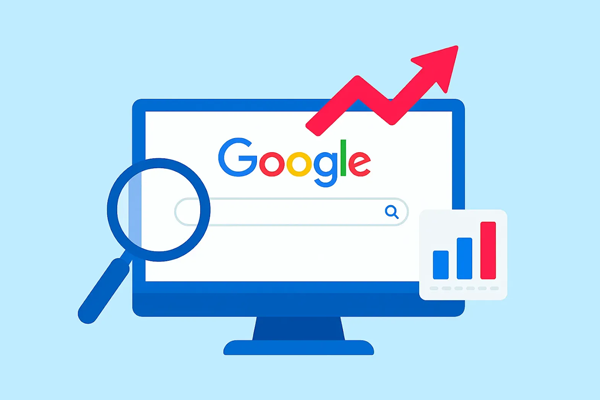
Have you ever had the feeling that your website is the world's largest library hidden? Amazing content has been written, a stunning site has been designed, and you know very well that the information is needed by people. But when you do a Google search for it, it's not there. Annoying, isn't it?

Everybody is familiar with the traditional game of SEO (Search Engine Optimization). First, you do keyword research, then write a post, create some backlinks, and finally pray that Google becomes aware of your existence. It seems like a drive with a map and hoping you wouldn't get missed at any point.
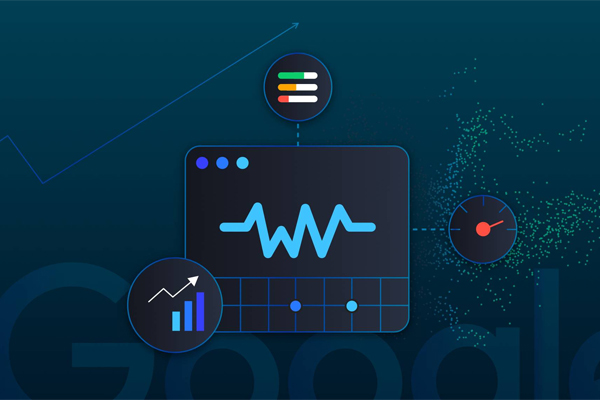
As soon as a Google user clicks to your website a clock starts to tick. If your site is slow or the text keeps moving while the user is reading or the button response at the other end is slow, then the user leaves your site. A single, irritated pressing of the "back" button means you lose traffic, interaction, and possibly even sales.

When you type a question into Google and hit Enter, you're talking to one of the world's smartest computer programs. These computer programs are called search engine algorithms, and they are the secret formula for discovering the most suitable answer out of billions of web pages.

The "Graphic Design is My Passion" meme is a funny internet joke about bad design. It started making fun of poorly designed graphics, but over time, it expanded a lot. People use this meme to joke about cringy, messy, or strange designs. The phrase reads confidently, but when combined with a terrible design, it creates a funny comparison. The meme started on Tumblr in 2014, showing a poorly drawn green frog and ugly text. It has expanded since then, inspiring many copies on the internet.

AI presents an undeniable transformation for the future of SEO by programming routine tasks. It enables researchers to boost keyword analysis and improve content efforts and performance evaluation. Yet, people continue to be essential for interpreting user needs and producing high-quality materials.

The mark of business is always that content marketing remains an ever-changing turf. Keeping track of the trends has to be a crucial factor in ensuring that customers can learn a competitive edge over other businesses. 2026 opens up multiple years for trends emerging forth in creating a new future for content marketing worldwide. For instance, this includes AI personalisation, as well as video and interactive elements.
Your email address will not be published.
Required fields are marked *
 +91-74286 23211