Looking an expert team?  +91-74286 23211
+91-74286 23211  sales@semreseller.com
  Mon-Fri 9:30 - 6:30
+91-74286 23211 sales@semreseller.com Mon-Fri 9:30 - 6:30
Mon-Fri 9:30 - 6:30
+91-74286 23211 sales@semreseller.com Mon-Fri 9:30 - 6:30 Did you know the number one way customers find local businesses today isn't by driving around or checking the phone book?
Using Google Search and Google Maps is the most common method. When a person looks for a product or service in their vicinity— no matter if it's "top pizza" or "closest electrician"—the results that pop up in that big box with the map and the business information are actually coming from your Google Business Profile (GBP).
Presented here is a clear and easy-to-follow guide to the most effective practices that will turn your Google Business Profile into a customer-magnet.
Before you experiment with any fancy tricks, you need to lay a strong and trustworthy foundation first. The primary aim of Google is to provide users with information that they can rely on and the basics is where it all starts.
It's impossible to control your digital reputation without possessing it. The initial action is to claim your company and get it authenticated by Google, which is often done through a postcard, phone call, or email. A non-verified profile is a very weak profile that Google will not encourage to the top.
The most significant aspect is NAP: Name, Address, and Phone number. The name of your business, its physical address, and its contact number must be the same on your Google Business Profile and your website, Facebook page, and any other online listing.
Why is it so crucial? Discrepancies puzzle Google and, in turn, your business loses credibility. If your profile mentions "Main St." while your website states "Main Street," Google considers it a red flag. Choose one style and apply it everywhere.
A fully completed profile is a profile that is very powerful. Every section left blank is another opportunity lost for the customer to discover you.
Primary Category: You will be making the most important choice here. Be very specific! Go for "Thai Restaurant," instead of just "Restaurant."
Secondary Categories: Include every other relevant category that you can think of. This will help Google to associate your business with a broader range of searches.
Description: Take this space for your story, why you are unique, and what makes you different from others to tell. Highlight your specialties and services while naturally incorporating keywords that are relevant to your business and your story. Pro Tip: Don't place promotional offers or website links in the description—that's what Posts are for.
Hours: Be truthful and always adjust for holidays and special events. A customer who comes to a closed business is a customer that you have lost for good.
After you have completed the profile, it is time to make it more appealing to the eyes and more interactive. The communication that is constantly going on and the presence of good and current photos attract the people to the listings for longer periods of time.
Your profile picture is the representation of your business in the digital world. Customers are also able to upload pictures (which can be unflattering or blurry), thus it is important to take hold of the narrative through visuals.
What to Upload: Have pictures that are of high quality and well lit and showing your storefront (so people can locate you without much trouble), your interior (depicting the mood), and your commodities or services (showing your best work with the least effort).
Keep it Fresh: Do not upload a few images only once. Your target should be to add new pictures every month to prove to Google and customers that your business is vibrantly alive and up-to-date.
You can consider Google Posts as a mini-blog or social media feed that is located right on your search listing. It is the ideal spot for temporary information to be shared with the audience.
What to Post: Brand new items in the menu, weekend discounts, an update on holiday schedule, an upcoming event, or a new staff member.
Why it Matters: Posts keep your profile fresh and active, and they give customers a reason to engage. Always have a Call-to-Action (CTA) button such as "Learn More" or "Order Online" included.
In the respective sections, it is very important to make a clear presentation of everything you offer. This is going to give Google a much clearer picture to use in pairing you with what people are looking for. For a gardener, to list "Lawn Mowing," "Tree Trimming," and "Gutter Cleaning" is far superior to the category "Landscaping Service" alone.
Reviews are the most significant factor that builds trust for your profile. They have an impact on how well your profile ranks and on the choice that the customer makes.
New reviews should be coming in constantly to let Google know that your business is popular and relevant. Simply asking is the most recommended method to achieve this!
Make it Convenient: Generate a direct link that takes a review window and share it through text, email, or a QR code at the checkout counter.
Velocity of Reviews: Google takes into account the frequency of reviews that you received recently, so it is more crucial to develop a habit of getting them rather than making a one-time big push.
Engaging with reviews is a must-do activity. It exhibits that you care about your customers, and at the same time, proves to Google that you are an active business owner.
Positive Reviews: Appreciate them with the mention of their name and the product or service they used. This way, your profile gains more keyword relevance.
How About: "Thanks, Sarah! Our new artisan coffee and friendly service are what you enjoyed, and we are happy about that!"
Negative Reviews: Maintain your composure, and act professionally. Express regret for their experience and provide a sincere, offline way to solve the problem (e.g., "Call our manager at X so we can solve this for you"). Do not engage in a public dispute. Your professional reply may transform a negative into a public victory.
Customers are allowed to post questions on your profile directly, and other users can respond usually with wrong information!
Be Ahead of the Game. Regularly check this area. Even better, "seed" it with your own questions and answers about the business, like "Do you have free Wi-Fi?" or "Is there parking?" This will provide customers with accurate and helpful information right away.
Google usually introduces different kinds of features like exact attributes (for instance, 'Black-owned,' 'Outdoor Seating,' 'Online Appointments'). Keep an eye on it and as soon as they become relevant to your business, get the new tags added.
If you consider your Google Business Profile as the number one marketing tool of yours and at the same time, you follow the best practices, then your business will be visible but also the most trustworthy and appealing one in your locality. It is the simplest way to turn a Google search into the customer who walks into your shop.
So, what is the first thing you are going to check or update on your profile today?

Digital Marketing Specialist at SEMReseller

Did you know the number one way customers find local businesses today isn't by driving around or checking the phone book?

When users start their web browser, they encounter the search bar TMPro field that displays "Search Google or type a URL." This browser command lets users use Google search services or manually specify website addresses.

User-generated content offers a strong tool to draw viewer participation as well as enhance brand recognition and enhance brand loyalty. Customers will participate through contests that promote the creation and distribution of brand-related content. As a result, this makes the customers feel valued while also providing you with authentic marketing materials. Furthermore, correctly executing this significantly improves your brand's digital footprint. This blog will walk you through the process of developing a successful UGC contest that resonates with an international audience.

If your business is heavily dependent on your website, you are likely wondering: Is AI going to take away my traffic? What about SEO?

Have you once thought about how precisely Google could determine the information you were seeking even if your search was somewhat unclear or used non-standard words? It almost feels like the search engine is tapping into your thoughts!
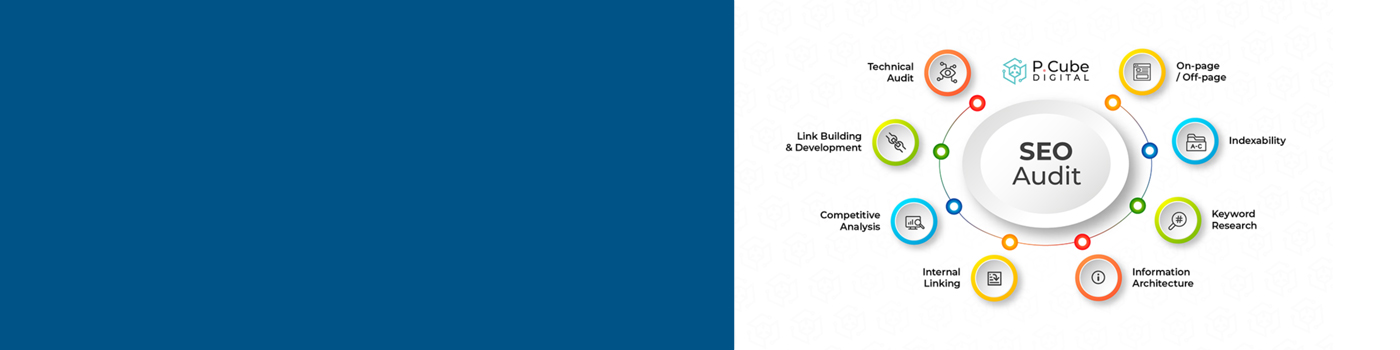
The secret of getting a good position on Google does not only involve great content. You may have the best post but if it is hosted on a slow-loading server, it will not get traffic from Google searches, nor will any user wait for it to load.

Business successes rely on conversions no matter what stage of operation your company currently has. Your upgrading techniques for conversions can boost your ability to capture target clients.
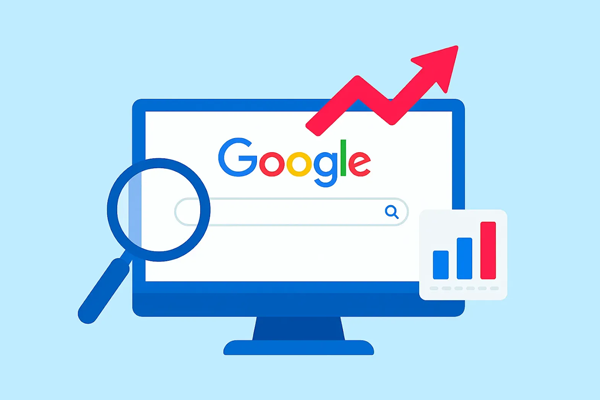
Have you ever had the feeling that your website is the world's largest library hidden? Amazing content has been written, a stunning site has been designed, and you know very well that the information is needed by people. But when you do a Google search for it, it's not there. Annoying, isn't it?

Everybody is familiar with the traditional game of SEO (Search Engine Optimization). First, you do keyword research, then write a post, create some backlinks, and finally pray that Google becomes aware of your existence. It seems like a drive with a map and hoping you wouldn't get missed at any point.
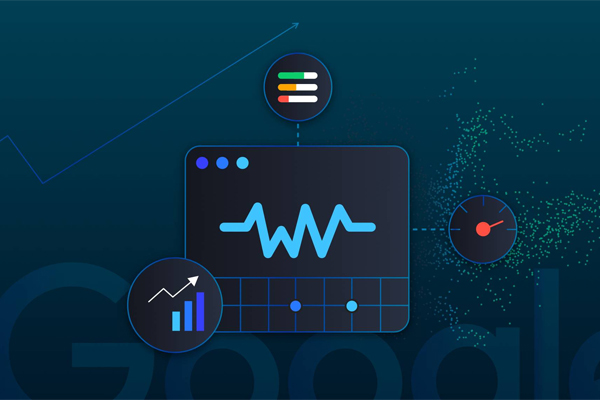
As soon as a Google user clicks to your website a clock starts to tick. If your site is slow or the text keeps moving while the user is reading or the button response at the other end is slow, then the user leaves your site. A single, irritated pressing of the "back" button means you lose traffic, interaction, and possibly even sales.
Your email address will not be published.
Required fields are marked *
 +91-74286 23211