Looking an expert team?  +91-74286 23211
+91-74286 23211  sales@semreseller.com
  Mon-Fri 9:30 - 6:30
+91-74286 23211 sales@semreseller.com Mon-Fri 9:30 - 6:30
Mon-Fri 9:30 - 6:30
+91-74286 23211 sales@semreseller.com Mon-Fri 9:30 - 6:30 Have you once thought about how precisely Google could determine the information you were seeking even if your search was somewhat unclear or used non-standard words? It almost feels like the search engine is tapping into your thoughts!
However, this is not a trick but rather the function of semantic search. If you haven't realized already, focusing solely on keyword stuffing is an old practice and it may lead to no improvement in rankings. It's time to go for the right direction. Semantic search is the new way of search engine operations and mastering it is a must for online visibility.
This article is your straightforward guide to understanding semantic search and optimising your website content to benefit from it.
Semantic search, in its most basic definition, is a technology that prioritizes the meaning and intention of the user's words over the words themselves in the process of searching for data.
Think about the difference between a simple computer program and a conversation with a friend.
Old-School Keyword Search: Imagine an outdated library catalogue. If you were to look up "large canine mammal," the catalogue would only list those books whose titles or subject matter included the exact phrase "large canine mammal." The library catalogue wouldn't realize that you might be interested in books on "dogs," "wolves," or a specific "breed" instead.
Modern Semantic Search: Now think of a very good librarian being asked for "large canine mammal" and he immediately knowing that you want to know about "dogs," "wolves," "canines," "animal behaviour" and even "dog parks" nearby. The librarian comprehends the connection of the words and the concept you are searching for.
That is semantic search, at its core, and search engines, employing sophisticated technologies such as Artificial Intelligence and Natural Language Processing (NLP), are gradually becoming that astute librarian. The context, user intention and relationships are the three areas where they focus their viewing hooks:
The Context: What are the other words that are in the vicinity of your search words? (e.g. searching for "Apple" next to "iPhone" is not the same as looking for "Apple" next to "pie recipe").
User Intent: What does the user want to accomplish? Is he or she looking to purchase something, gain knowledge or find a place?
Relationships: What is the tie between various ideas and "entities"(people, places, things, concepts)? This is frequently facilitated by networks such as Google's Knowledge Graph, an extensive database that contains facts and their interconnections.
The aim is to deliver the most suitable, useful, and satisfying response even if the user's question is not expressed perfectly.
Semantic search is the method through which you will be discovered if you make content, be it a blog post, a product page, or a service description. The principal advantages are:
Improved Relevance: Your content will appear for a more diverse range of related searches, not only for the exact keywords you used.
Traffic of Better Quality: The users coming to your site will probably be the ones who are looking for exactly what you offer since the search engine is proficient in interpreting user intent.
Securing the Future: There is no doubt that search will only become more intelligent. The only way to ensure you remain visible with changing algorithms is to optimize for meaning and topic coverage.
Semantic search optimization is usually referred to as Semantic SEO. Fortunately, it is less about clever technical tricks and more about providing truly valuable, well-structured content for your audience. Here's a straightforward plan of action:
This is the most important principle of semantic SEO. Before you write anything, you have to find out what the searcher's goal is.
Informational: They want to find out the answer to a question or learn something new. (e.g., "What is semantic search?")
Your Content Goal: Supply exhaustive, detailed answers and explanations.
Navigational: They want to reach a particular website or page. (e.g., "Google Search Central")
Your Content Goal: Make your brand/site easily found and recognized.
Transactional: They want to make a purchase. (e.g., "Buy blue running shoes size 10")
Your Content Goal: Concentrate on product pages, clear pricing, and a straightforward checkout process.
Commercial Investigation: They are gathering information before deciding to buy. (e.g., "Best blue running shoes review")
Your Content Goal: Offer thorough reviews, comparisons, and feature lists.
Action Step: Check the search results (the SERP) for the topic you wish to cover. What type of content is already ranking? Are they lengthy articles, product lists, or step-by-step guides? Align your content type with the prevailing intent.
One keyword per page targeting concept is an outdated practice. It is time to focus on covering an entire topic comprehensively.
Instead of: A page was written specifically for the keyword "best coffee,"
Try: A detailed guide on the "Home Coffee Brewing" topic which naturally comprises sections on "best coffee beans," "grinders," "methods (pour-over vs. espresso)," and "storage tips."
When you address a topic in-depth and naturally, you will inevitably use all the related words, synonyms, and long-tail variations without imposing them. This indicates to the search engine, "This page is the ultimate resource on this topic," thus enhancing your credibility.
To clearly demonstrate your expertise on the topic, arrange your content into clusters. This is a straightforward organization:
Pillar Page: An extensive, all-encompassing guide that discusses a vast topic (e.g., "Ultimate Guide to Digital Marketing").
Cluster Content: A number of shorter, more specific articles that explore particular subtopics (e.g., "How to Master Social Media Marketing," "Beginner's Guide to SEO," "Email Marketing Best Practices").
You interlink all the Cluster Content back to the Pillar Page and vice versa. This network of links makes it apparent to search engines what the relationships between your concepts are, which in turn strengthens your authority over the entire subject.
This sounds complicated, but it is a very powerful tool for semantic search. Schema markup is a special type of code that you can add to your website that makes it easier for search engines to recognize and have a clear understanding of your content.
Imagine the scenario where your web page has the term 'recipe' on it. Google knows the word is there without schema. With Recipe Schema, however, you are basically informing Google, "This is a recipe for Chocolate Chip Cookies, the author is Jane Doe, the cooking time is 15 mins, and the ingredients are flour, butter, and sugar."
This clear-cut structure allows Google to more easily use your data in certain search features like "Rich Snippets" (those enhanced, visual results with ratings or images) and to also build its Knowledge Graph. Most of the modern website platforms and SEO plugins allow users to add the basic Schema very easily.
The transition from locating "strings" (keywords) to locating "things" (entities and concepts) is one of the major changes brought about by semantic search technology. The transition is beneficial not only to users but also to content creators as it both removes the practice of keyword tricks and rewards the quality, relevance, and deep understanding of the content.
To optimize for this new era, concentrate on terrific topic coverage, know precisely what your audience needs, order your content in a clear way, and produce the most relevant and useful answer on the web. If you do that, you'll be able to turn semantic search into an ally instead of an adversary.

Digital Marketing Specialist at SEMReseller

When users start their web browser, they encounter the search bar TMPro field that displays "Search Google or type a URL." This browser command lets users use Google search services or manually specify website addresses.

User-generated content offers a strong tool to draw viewer participation as well as enhance brand recognition and enhance brand loyalty. Customers will participate through contests that promote the creation and distribution of brand-related content. As a result, this makes the customers feel valued while also providing you with authentic marketing materials. Furthermore, correctly executing this significantly improves your brand's digital footprint. This blog will walk you through the process of developing a successful UGC contest that resonates with an international audience.
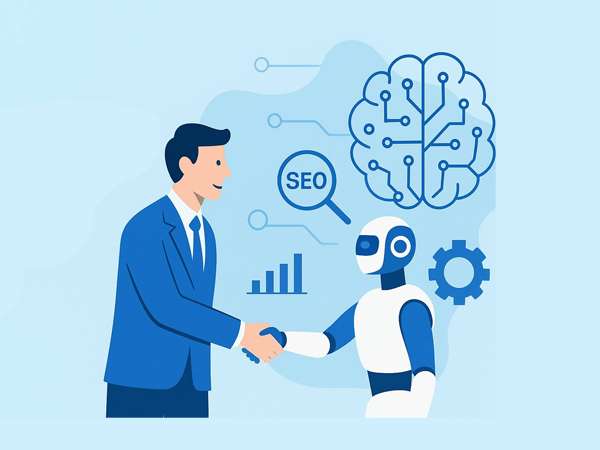
If your business is heavily dependent on your website, you are likely wondering: Is AI going to take away my traffic? What about SEO?

Have you once thought about how precisely Google could determine the information you were seeking even if your search was somewhat unclear or used non-standard words? It almost feels like the search engine is tapping into your thoughts!
The secret of getting a good position on Google does not only involve great content. You may have the best post but if it is hosted on a slow-loading server, it will not get traffic from Google searches, nor will any user wait for it to load.

Business successes rely on conversions no matter what stage of operation your company currently has. Your upgrading techniques for conversions can boost your ability to capture target clients.
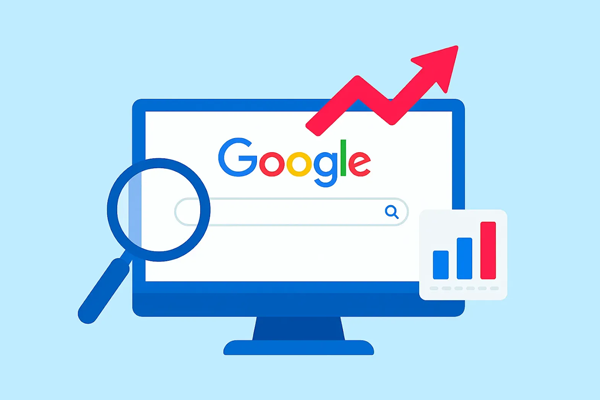
Have you ever had the feeling that your website is the world's largest library hidden? Amazing content has been written, a stunning site has been designed, and you know very well that the information is needed by people. But when you do a Google search for it, it's not there. Annoying, isn't it?

Everybody is familiar with the traditional game of SEO (Search Engine Optimization). First, you do keyword research, then write a post, create some backlinks, and finally pray that Google becomes aware of your existence. It seems like a drive with a map and hoping you wouldn't get missed at any point.
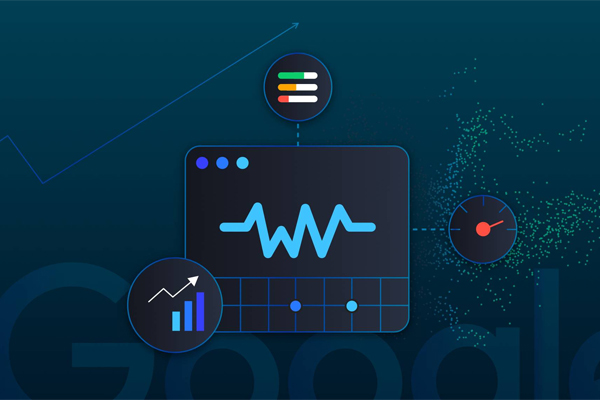
As soon as a Google user clicks to your website a clock starts to tick. If your site is slow or the text keeps moving while the user is reading or the button response at the other end is slow, then the user leaves your site. A single, irritated pressing of the "back" button means you lose traffic, interaction, and possibly even sales.

When you type a question into Google and hit Enter, you're talking to one of the world's smartest computer programs. These computer programs are called search engine algorithms, and they are the secret formula for discovering the most suitable answer out of billions of web pages.
Your email address will not be published.
Required fields are marked *
 +91-74286 23211