Looking an expert team?  +91-74286 23211
+91-74286 23211  sales@semreseller.com
  Mon-Fri 9:30 - 6:30
+91-74286 23211 sales@semreseller.com Mon-Fri 9:30 - 6:30
Mon-Fri 9:30 - 6:30
+91-74286 23211 sales@semreseller.com Mon-Fri 9:30 - 6:30 COVID-19 coverage that started only as a simple alert panel on SERP has now turned out to be a very prolific set of information. This is not only an easy to access data source available on Google, but this is something that would be coming to SERP permanently.
Google shows many queries related to COVID-19 which is unique in two ways:
There is an absurd amount of data available on Google SERPs. It shows a breakdown of COVID-19 cases in your area as an accent to a global map of the pandemic’s spread. Of course, it also provides you with a link to click ahead to see a full breakdown of COVID-19 data available in SERP. It’s just a testimony that how hard Google could push the data in front of its users if it wanted to. Doing so would be both awesome and a bit frightening too at the same time.
While the right side of this COVID 19 contains the information & knowledge, the left side features special functionality. Google is providing a sticky menu that serves to delve into different aspects related to this pandemic. When you click on a specific option available in the menu, it gives you an entire SERP defining the aspect of COVID-19.

Personalization is a tricky matter. There’s a lot to balance when trying to highly target a specific user. That’s true for us as marketers and for Google as well. Google has faced issues about personalization for a long time. The main example of this has been the controversy which Google has faced with personalization within the search results leading to a filter bubble.
At the same time, personalization puts Google on a collision course with another one of its “search result aspirations”-diversity. To target its users effectively, Google is catering to multiple intents with a diverse set of results. Hyper-personalization and a strong diversification of the search results are obviously at heads with each other. You simply can’t have both. There is not enough space on the SERP to show an effective amount of diversity with strongly targeting a user with 10 results only.
So, what process will Google adopt to solve this? This is done by the functionality available at the left side of SERP for COVID-19 queries.
The biggest white elephant when we discuss the personalization within the search results is not the filter bubble nor is it the diversity vs personalization. Rather, the personalization is itself a problem and solving this problem is never possible without the user input.
No matter how smart Google gets and how great it becomes after providing its user personalized results, Google will never be able to identify what a user is in its specific moment. The only way Google can do this is by putting the user in control of SERP.
For example, you searched on Google for estate planning. There is a lot you could mean by this query. You can look for the information related to the financial end or you want some information about tax information? If it’s the latter in which state, you are living in as every state has the different state laws.
Google can also look at your past behaviour and search history and suggest with you lawyers in your state to help you navigate the legalities of the estate. It may be also that the user wants some financial information despite the previous searches.
Now imagine, if you had a SERP with a sticky menu at the left of the page that allows you to see a SERP related to ethical lawyers, financial services, etc. With user input, Google can offer you a full set of results that matches my exact intent.
Not every user has the same intent so that one can open tabs for results that hit on multiple intents without having to run multiple queries. Simply, Google has implanted for COVID 19 results that bring a new level of user input in the SERP.
Like the COVID-19 SERP, you can see that how having a sticky menu helps to prevent a collision between personalization and result diversity. This menu functionality allows its users to breakdown the query by intent. It lets Google target the user on the initial SERP without having a diverse set of results. The sticky menu allows Google to engage in a topic-based segmentation.
Last, but not least, a side menu that gives Google the opportunity it needs to avoid any sort of filter bubble criticism. In such a scenario, Google would not have to worry about the results on the SERP further confirming a user’s biases. The side menu allows going full-on personalization. All Google would need to do is supplement the extreme level of personalization with a broader set of content that would be accessed via the side menu.
The SERP is now antiquated in many ways. The entire construct is one that was designated for a different era of digital content consumption. As Google gets better at understanding what’s out there and gets better at serving what it now understands it is going to need creative solutions to head-off some serious problems.
No one can predict the future. But it’s hard to imagine that Google designed a new format for the SERP and is not thinking about its implications. Whether it be the format and functionality Google is using for its COVID-19 SERPs or its something that allows some sort of user’s input only.

Digital Marketing Specialist at SEMReseller

Have you once thought about how precisely Google could determine the information you were seeking even if your search was somewhat unclear or used non-standard words? It almost feels like the search engine is tapping into your thoughts!

The secret of getting a good position on Google does not only involve great content. You may have the best post but if it is hosted on a slow-loading server, it will not get traffic from Google searches, nor will any user wait for it to load.

Business successes rely on conversions no matter what stage of operation your company currently has. Your upgrading techniques for conversions can boost your ability to capture target clients.
Have you ever had the feeling that your website is the world's largest library hidden? Amazing content has been written, a stunning site has been designed, and you know very well that the information is needed by people. But when you do a Google search for it, it's not there. Annoying, isn't it?
Everybody is familiar with the traditional game of SEO (Search Engine Optimization). First, you do keyword research, then write a post, create some backlinks, and finally pray that Google becomes aware of your existence. It seems like a drive with a map and hoping you wouldn't get missed at any point.
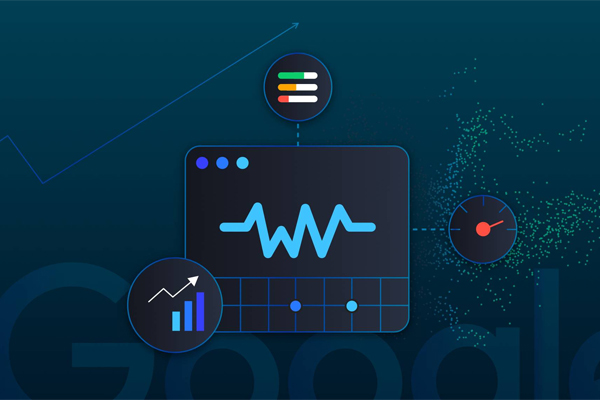
As soon as a Google user clicks to your website a clock starts to tick. If your site is slow or the text keeps moving while the user is reading or the button response at the other end is slow, then the user leaves your site. A single, irritated pressing of the "back" button means you lose traffic, interaction, and possibly even sales.

When you type a question into Google and hit Enter, you're talking to one of the world's smartest computer programs. These computer programs are called search engine algorithms, and they are the secret formula for discovering the most suitable answer out of billions of web pages.

The "Graphic Design is My Passion" meme is a funny internet joke about bad design. It started making fun of poorly designed graphics, but over time, it expanded a lot. People use this meme to joke about cringy, messy, or strange designs. The phrase reads confidently, but when combined with a terrible design, it creates a funny comparison. The meme started on Tumblr in 2014, showing a poorly drawn green frog and ugly text. It has expanded since then, inspiring many copies on the internet.

AI presents an undeniable transformation for the future of SEO by programming routine tasks. It enables researchers to boost keyword analysis and improve content efforts and performance evaluation. Yet, people continue to be essential for interpreting user needs and producing high-quality materials.
The mark of business is always that content marketing remains an ever-changing turf. Keeping track of the trends has to be a crucial factor in ensuring that customers can learn a competitive edge over other businesses. 2026 opens up multiple years for trends emerging forth in creating a new future for content marketing worldwide. For instance, this includes AI personalisation, as well as video and interactive elements.
Your email address will not be published.
Required fields are marked *
 +91-74286 23211