Looking an expert team?  +91-74286 23211
+91-74286 23211  sales@semreseller.com
  Mon-Fri 9:30 - 6:30
+91-74286 23211 sales@semreseller.com Mon-Fri 9:30 - 6:30
Mon-Fri 9:30 - 6:30
+91-74286 23211 sales@semreseller.com Mon-Fri 9:30 - 6:30 If you are looking for the best ideas to rank your product page, you are in the right place. Most developers know that ranking product pages are more challenging than blog posts, but only a few like you want to know ideas to improve their search visibility. Only then will it be possible to sell your goods or services in the rapidly increasing eCommerce market. So who else is better to give the best ideas for ranking your product pages than John Mueller, the webmaster trends analyst at Google? Check out Mueller's thoughts on how Google Shopping Feed and internal linking make your product pages more visible with high ranking.
Many developers worldwide wonder why their blog post ranking is far better when compared to their product page ranking. It is significant because the eCommerce business crosses 4.2 trillion dollars, with over two billion people purchasing online last year. Hence there is severe competition for the product page to be at the top of SERP. Except for the top companies, the other product selling companies compete to be on the first page in the eCommerce business. But only a few succeed, and that too with continuous successful SEO practices, they could also remain there. It is why many developers can make their blog posts visible and not the product page.

Image courtesy: blog.upgrowth.in
Mueller also agrees that there is intense competition, and it takes a long time to grow. Low rankings are only because the competition is high ranking. It is challenging to reproduce what the competitors do differently, giving them the advantage in the specific niche and some problem in the product page that keeps the ranking low. Hence, optimizing the pages for ranking is essential to find that problem or know what is missing. It may be better product descriptions or comparisons with others.
Image courtesy: Google
Mueller acknowledges the fact that ranking a product page is indeed always a challenging task for any developer. Also, he says that there is no simple trick that could make it happen without promoting the product pages; it is tough to achieve the top rankings. Mueller suggests using Google Shopping Feed for getting the content shown on the organic results. Since he is unsure of having all the merchant centers set up correctly in all countries, he wants to submit all the products on it for free to show them in the Shopping Search results. Google sometimes may mix it with regular search results to get the product page more visibility.
Google Shopping is fast to see product photos, links, and stores and be comprehensive for customers to find unusual and standard products.
It is also powerful in applying Google's search technology for helping customers to identify and research products from many online stores across the web to show where to buy them directly. In addition, Google Shopping provides a new product discovery experience to facilitate users to connect with sellers to get information on the latest discounts and offers and buy at current prices. This is why Mueller wants the developers to use Google Shopping feed for the product page to top in the SERP rankings.
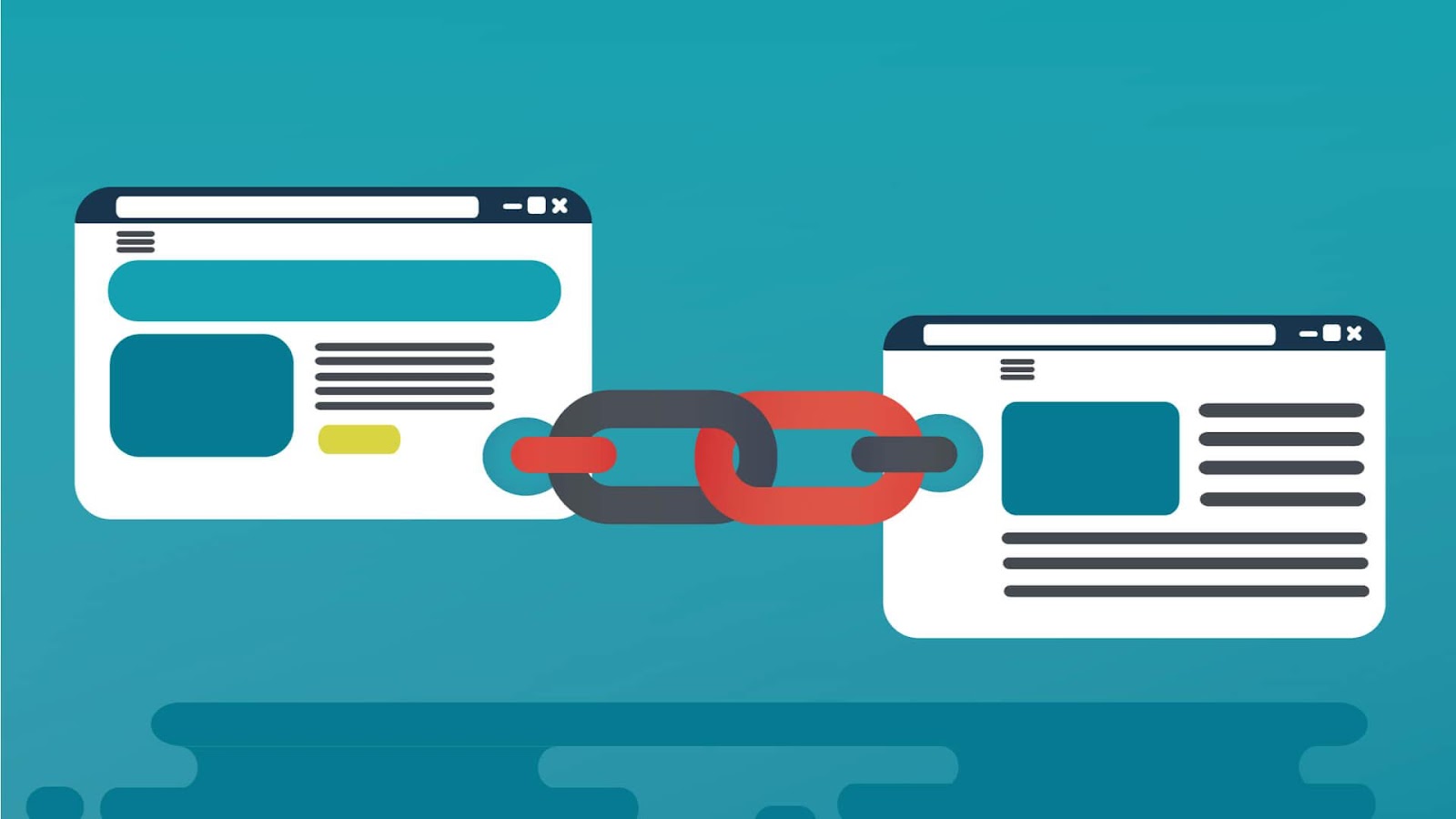
Image courtesy: searchengineland.com
Mueller is highly excited about optimizing internal links from blog posts to product pages because it is easy to rank them. He wants the developers to make sure they have a set-up for explicit internal linking from blog pages to the actual products. But Mueller discourages the practice of linking too many products to one blog post. He says that it will make all those products to be both high and little relevant. And hence he wants only to link a few products that are popular and earn more. Also, he wants to prioritize the products for internal linking to give preference to those that make most of the money and are easiest to sell. Hence, promoting those products with good internal linking will help the product page rank on top of the SERP rankings.
Google repeatedly confirms that by increasing the number of links to a page, its ranking will increase. As many thinks, internal linking is not complex but simple for optimizing the product page. It connects one page of the site to a different page, with the domains of the source and the target being the same. Internal solid linking helps visitors navigate the website efficiently, defines its hierarchy and architecture, and distributes ranking power and page authority. Using deep and relevant links naturally with anchor text in a lot of content will optimize the product page to make it visible with top ranking on SERP.
So far, you have read Mueller's ideas for optimizing the product pages with Google Shopping and internal links. For someone wanting to improve their rankings even after optimizing the product page, Mueller has some ideas. Even after not linking all the products and prioritizing only the most popular to promote and still the product page has not gone up in ranking, Mueller says that the developers are doing things right. Since there are various aspects involved, Mueller says they have covered most of it and wants them to continue in the same direction. Also, he wants internal links to the products from the blog posts and the site itself. And for individual pages to rank better, his idea for sites with fewer products to funnel a little better links all of them to the home page.
Mueller concludes that even doing the above right things with the severe competition will take time to rank the product pages.

Digital Marketing Specialist at SEMReseller

Have you once thought about how precisely Google could determine the information you were seeking even if your search was somewhat unclear or used non-standard words? It almost feels like the search engine is tapping into your thoughts!

The secret of getting a good position on Google does not only involve great content. You may have the best post but if it is hosted on a slow-loading server, it will not get traffic from Google searches, nor will any user wait for it to load.

Business successes rely on conversions no matter what stage of operation your company currently has. Your upgrading techniques for conversions can boost your ability to capture target clients.
Have you ever had the feeling that your website is the world's largest library hidden? Amazing content has been written, a stunning site has been designed, and you know very well that the information is needed by people. But when you do a Google search for it, it's not there. Annoying, isn't it?
Everybody is familiar with the traditional game of SEO (Search Engine Optimization). First, you do keyword research, then write a post, create some backlinks, and finally pray that Google becomes aware of your existence. It seems like a drive with a map and hoping you wouldn't get missed at any point.
As soon as a Google user clicks to your website a clock starts to tick. If your site is slow or the text keeps moving while the user is reading or the button response at the other end is slow, then the user leaves your site. A single, irritated pressing of the "back" button means you lose traffic, interaction, and possibly even sales.

When you type a question into Google and hit Enter, you're talking to one of the world's smartest computer programs. These computer programs are called search engine algorithms, and they are the secret formula for discovering the most suitable answer out of billions of web pages.

The "Graphic Design is My Passion" meme is a funny internet joke about bad design. It started making fun of poorly designed graphics, but over time, it expanded a lot. People use this meme to joke about cringy, messy, or strange designs. The phrase reads confidently, but when combined with a terrible design, it creates a funny comparison. The meme started on Tumblr in 2014, showing a poorly drawn green frog and ugly text. It has expanded since then, inspiring many copies on the internet.

AI presents an undeniable transformation for the future of SEO by programming routine tasks. It enables researchers to boost keyword analysis and improve content efforts and performance evaluation. Yet, people continue to be essential for interpreting user needs and producing high-quality materials.

The mark of business is always that content marketing remains an ever-changing turf. Keeping track of the trends has to be a crucial factor in ensuring that customers can learn a competitive edge over other businesses. 2026 opens up multiple years for trends emerging forth in creating a new future for content marketing worldwide. For instance, this includes AI personalisation, as well as video and interactive elements.
Your email address will not be published.
Required fields are marked *
 +91-74286 23211