Looking an expert team?  +91-74286 23211
+91-74286 23211  sales@semreseller.com
  live:semreseller
  Mon-Fri 9:30 - 6:30
+91-74286 23211 sales@semreseller.com live:semreseller Mon-Fri 9:30 - 6:30
Mon-Fri 9:30 - 6:30
+91-74286 23211 sales@semreseller.com live:semreseller Mon-Fri 9:30 - 6:30 Everybody is familiar with the traditional game of SEO (Search Engine Optimization). First, you do keyword research, then write a post, create some backlinks, and finally pray that Google becomes aware of your existence. It seems like a drive with a map and hoping you wouldn't get missed at any point.
But what if the map you have was actually talking to you? What if it could predict traffic delays, recommend alternate routes, and even guide you to the best coffee places on your way?
This is basically what AI-Powered SEO means. It is the case of going from a guesswork approach of what Google wants to a smart co-pilot that processes millions of data points to give you the quickest and precise way to success.
Traditional SEO can be equated to website maintenance, much like oil change and tire rotation. These practices are done according to the general best practices.
AI-Powered SEO is about coming up with superlative ways and getting the help of Artificial Intelligence and Machine Learning (ML) in the big, intricate realm of search data.
At the bottom, it signifies employing highly developed software to:
It is getting away from the old ways of doing things and moving towards getting real-time, custom-made, data-driven instructions that are perfect for your website and your audience through the use of technology.
AI-powered SEO at its core can be characterized by its capability to perceive in milliseconds what a human would never grasp at all; that is nothing but the subtle links between a search query and the perfect answer. Several of such applications are powering this.
Previously, keyword research was more focused on the popularity of words like "running shoes." The next step would be trying to rank for that word.
AI has taken it to a whole new level. It employs a very sophisticated technology called Natural Language Processing (NLP) that enables it to find out the intent behind the search.
Issue: A person who types "running shoes" could be intending to buy a pair, or get the best brands' reviews, or perhaps just looking for tips on lacing them up.
AI Tools Solution: Tools AI do an analysis on a large scale (thousands of search results for "running shoes") and based on that categorize the type of content that ranks highest (e.g. product pages, blog reviews, forum discussions) and tell you which content has to be created in order to get that particular user intent satisfied. It even provides the most natural, conversational variations of the keyword that a human would actually employ. With this, you cease to make assumptions and instead start producing material that is in perfect sync with what the user is actually searching for.
One of the constant challenges in the world of SEO is recognizing whether or not your writing really outshines your competitor's. AI intervenes here by means of Content Gap Analysis.
An AI SEO system for instance can go through the ten best articles on a specified theme and straight away discern what they all lack. If 90% of the material mentions the good sides of the product and nobody talks about the environmental downside, the AI will call out that "missing piece."
By exposing these gaps the AI will provide you with a precise route to your goal - to write a definitive, thorough article, the kind of content that Google's algorithms (which are powered by AI that is the same as RankBrain) love to push. It secures not just a good, but complete content for you.
Google is in the business of continually attempting to provide a uniquely perfect search result for each individual user. AI-powered SEO helps you zero in on that moving target.
The AI tools go beyond taking just the basic demographics into account. They check out users' behaviour patterns:
What is the users' post-visit activity on your site? Do they leave right away (which indicates a high "bounce rate")? Are they visiting other pages?
This level of in-depth analysis lets the AI make very precise recommendations for content changes. For example, your audience might prefer short videos rather than long texts; or it could be that the engagement would be higher if the content was written in a less formal style. The AI detects these subtle trends and helps you improve your User Experience (UX) which Google will reward through ranking.
Keep in mind that AI is not coming to take the place of the SEO profession; rather it is the one empowering the SEO expert. The primary advantage of AI-powered SEO is the astonishing rise in both the efficiency and the accuracy of the whole process.
Quicker Adaptation: In the case of a major Google algorithm change, the first to analyze the fallout all over the world will be AI tools. They can tell the change in the pattern much faster than any human analysis which means you will be able to change your strategy in days, not months.
Concentration on Strategy: AI the human brain for the creative, high-value work: developing a unique brand voice, building strategic partnerships, and creating truly original, expert content that AI can't replicate. It does this by taking care of the boring but necessary tasks like checking broken links, generating basic outlines, and running technical checks.
Predictive Edge: The most sophisticated AI tools have the capability of performing predictive SEO. They can not only tell the popularity of the topic by trends and the performance of the competitors, but they can also enable you to create and optimize content even before the market is flooded. You thus get a significant first-mover advantage which is very critical.
AI-powered SEO is not a prediction of the future; rather, it is the present-day standard for digital marketing across the globe.
AI eliminates uncertainties in SEO. It applies data, speed, and intelligence to provide you with unambiguous guidelines regarding what to write, how to arrange it, and what technical problems to solve.
The moment you introduce AI into your SEO workflow; you stop pursuing algorithms and become a part of the user-cantered online world more powerfully than ever. Therefore, if you're striving for success in the digital world of today, AI won't be an option anymore; instead, it will be your indispensable, intelligent co-pilot.

Digital Marketing Specialist at SEMReseller
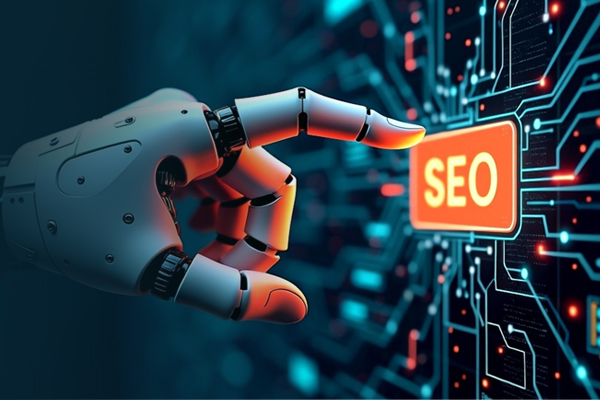
Everybody is familiar with the traditional game of SEO (Search Engine Optimization). First, you do keyword research, then write a post, create some backlinks, and finally pray that Google becomes aware of your existence. It seems like a drive with a map and hoping you wouldn't get missed at any point.
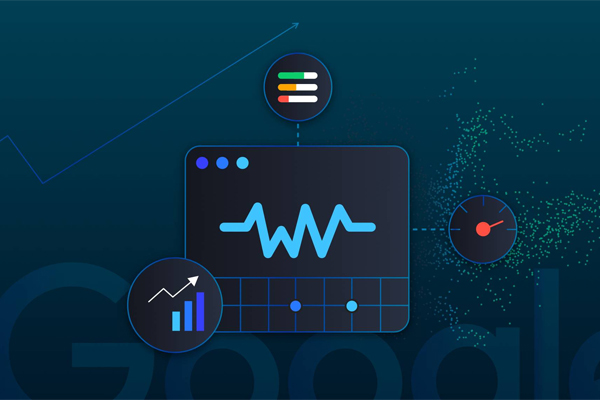
As soon as a Google user clicks to your website a clock starts to tick. If your site is slow or the text keeps moving while the user is reading or the button response at the other end is slow, then the user leaves your site. A single, irritated pressing of the "back" button means you lose traffic, interaction, and possibly even sales.
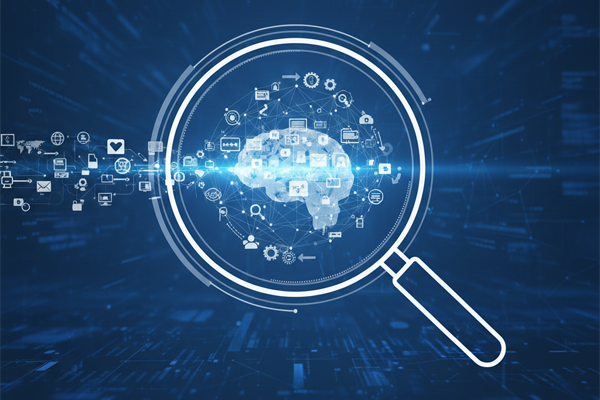
When you type a question into Google and hit Enter, you're talking to one of the world's smartest computer programs. These computer programs are called search engine algorithms, and they are the secret formula for discovering the most suitable answer out of billions of web pages.
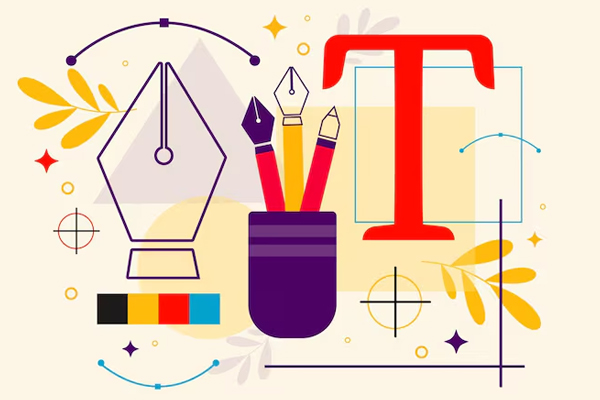
The "Graphic Design is My Passion" meme is a funny internet joke about bad design. It started making fun of poorly designed graphics, but over time, it expanded a lot. People use this meme to joke about cringy, messy, or strange designs. The phrase reads confidently, but when combined with a terrible design, it creates a funny comparison. The meme started on Tumblr in 2014, showing a poorly drawn green frog and ugly text. It has expanded since then, inspiring many copies on the internet.

AI presents an undeniable transformation for the future of SEO by programming routine tasks. It enables researchers to boost keyword analysis and improve content efforts and performance evaluation. Yet, people continue to be essential for interpreting user needs and producing high-quality materials.
The mark of business is always that content marketing remains an ever-changing turf. Keeping track of the trends has to be a crucial factor in ensuring that customers can learn a competitive edge over other businesses. 2026 opens up multiple years for trends emerging forth in creating a new future for content marketing worldwide. For instance, this includes AI personalisation, as well as video and interactive elements.

Social media monitoring of real-time discussions will expose trending matters through hashtagged keywords, which shows present-day popularity. You should monitor the content of news outlets alongside the posts on forums and blogs to follow trending and popular material. The online trend analysis tools help track search interest fluctuations since they base their results on user interactions. The major content platforms present alphabetical selections of trending posts, articles, and videos, which helps you understand what consumers are engaging with right now.

How people decide to buy things is dependent on Consumer Buying Behavior. Purchasing, choosing the product, or using a product or service are all included in this. Many people decide these things on the basis of need, desire to buy things as well as how the market influences them to buy these things. Every consumer out there faces many problems. These problems are generally about the choice or what type of thing the consumer wants or is willing to buy. This decision depends on social media, recent trends, personal choice, TV or commercial ads or anything that influences the consumer's mind.

Companies operating in the local marketplace require well-established digital marketing to capture new customers and effectively compete in their industry. The traditional methods of advertising with flyers and newspapers persist, yet people mostly discover services through alternative means. Instead, consumers turn to search, changing like Google to locate businesses near them.

Current market changes in digital marketing continue to revolutionize business-consumer practices through emerging technological developments and new market trends. Online marketing will experience rapid evolution through the coming years of 2025, enabling brands to construct different communication channels to attract and convert customers. Digital marketing depends on artificial intelligence, automation, and data-driven approaches to function as its basic framework.
Your email address will not be published.
Required fields are marked *
 +91-74286 23211