Looking an expert team?  +91-74286 23211
+91-74286 23211  sales@semreseller.com
  Mon-Fri 9:30 - 6:30
+91-74286 23211 sales@semreseller.com Mon-Fri 9:30 - 6:30
Mon-Fri 9:30 - 6:30
+91-74286 23211 sales@semreseller.com Mon-Fri 9:30 - 6:30 Do you know how the good use of images can help you improve your SEO? Find out what you should take into account to optimize the use of them.
Visual marketing can help you boost your SEO strategy, however, companies often focus on optimizing their content for search engines and don’t give the necessary credit to their images. Having solid images makes a measurable impact on the way a website is ranked by Google.
Despite all the innovation we’ve experienced in the digital medium over the past few years, Google remains the leader in determining which websites rank highest, which affects the number of sessions websites receive. This means that you must create your visual marketing plan taking into account the organic rankings of Google, long before spending time, effort, and money on designing images, especially if you are a small business with few resources or limited resources.
Here are five simple tips that will help improve your SEO.
Keywords are crucial in creating any piece of content, as they can also make a difference in the images we use. One of the steps that you can easily skip when creating visual content is optimizing alt tags. The alt tag is an alternative text to the image attributes, which allows images to appear in Google text searches. Now you can see why the ranking of your website in Google is so important.
Think about it if you want to upload an image without an alt attribute or alt tag. Google’s search algorithms will not be able to read the image because they are not equipped to do so, however they will be able to read the text you add in the alt tag section of the image. This will give Google the ability to read the image in the context of your website text and classify your website accordingly.
Alt tags are generally easy to edit. Most content management systems allow you to change the text in the alt tag or the attributes text box, so you can add the alt text to your image as part of the upload process. Look at this example in WordPress:
When creating your alt text, you should try to keep it short; since it is easier for Google to index shorter tags. Just as you shouldn’t include too many keywords in the text of your content, so you should avoid using too many keywords in the alt tag. Search engines find keyword stuffing and can consequently lower your website’s rank.
Instead, focus on using the alt tag as an opportunity to describe in words what is in the image, since alt tags are generally used by screen readers for visually impaired readers. By optimizing your alt tags, you will not only improve SEO on Google, but you can also reach a demographic that may not have been able to access your content correctly before.
The quality of the images affects how the visitors of your website get involved with the content, and as a result this also affects your SEO. When it comes to high-quality images, many companies immediately look for high-quality stock photos. Although it is not the same.
Due to the proliferation of stock photo providers and increasing user skills, stock photos have become easily recognizable to the point that users often get bored when they appear on websites and may even not trust a site that does not create its visual language.
Investing in the attributes of reused stock photos may be the cheapest option, but it’s not the best option if you want to improve your SEO. You must work on creating impressive images that not only catch the attention of your users but also make them stay on your website. So you need to create visual content that provides information to your visitors quickly and concisely while remaining eye-catching and shareable.
A great way to accomplish all of this is through infographics. Especially if your website has too much data. Infographics are capable of transmitting a large amount of information attractively and interactively. The infographics timeline of Venngage gives you the option to communicate a variety of information – historical landmarks, event calendars, and even product deliverables original stories – that will make the user experience that much more striking.
If you want proof, you can use heat maps to analyze the time your readers spend on individual pages and what images are most appealing to them.
Once you start using infographics to deliver your information and data in an eye-catching way, you’ll need to make sure that your infographic is optimized for Google. Just like images and alt tags, infographics aren’t easily indexed by Google if they don’t have adequate accompanying text. The Google image search engine will be able to index the infographic but to improve the SEO of your website, you will need that the infographic and the page where it is loaded also appear in Google’s text search.
The best way to do this is to write a text to accompany the page highlighting your infographic. This helps Google review the text and evaluate the content to give the page the ranking it deserves. To do this, you must create written content that can complement your infographic.
It is best to avoid explaining what is in the infographic because the user will not want to read a repetition of what they will easily see in the infographic. By combining strong infographics and relevant text, you’ll add value to your page, user experience, and Google’s ranking of your site.
We have emphasized the importance of using good quality images, but it is also very important that you manage to keep your file sizes small when you upload them to your website. Very large files will slow down the loading time of your website, which will be enough to frustrate users, so they want to leave your website. And you don’t want that to happen.
Beyond the user, what many companies haven’t noticed is that Google’s organic search ranking is also affected by site speed. The faster your site loads, the better your ranking will be; on the other hand, if it loads very slowly, Google may penalize your site.
One of the main factors that affect the loading speed of your website is the size of the images. You can test your site’s speed using Google’s Page Speed Insights tool, and if your site doesn’t load fast enough, you’ll need to check your images to see if sizes are slowing down your website.
Some points to consider when uploading images and infographics: PNG, SVG, and GIF files are good for both graphics and infographics, as they maintain image quality even at small sizes, while JPEG files are better for the pictures. You can also use image compression tools like ImageOptim before uploading images to your website to ensure the site loads very quickly.
Images and infographics, in particular, are great to share due to their high visual appeal and the ease with which they can be massively shared.
When creating visual content to accompany your text, it is likely that when other people see it, share it with other people, or reuse it on their websites if you are lucky, they will do it with your permission and with backlinks to your website. This process will not only give you access to audiences that you may not have been able to reach but by using backlinks you will increase your ranking in Google.
If someone uses your images without your permission, you have every right to ask for the credit. You can use Reverse Google Image Search to find the sites that are using your images to make sure you’re getting credit and find backlink opportunities.
Another way to take advantage of image sharing and get more backlinks is to use social media or influencers. Images improve the properties of the text and if you can create high-quality infographics that help improve an informative piece or help an influencer get more interest in your publication; You can create a relationship that will be of mutual benefit to you both you and your partners. Remember that Google has strict backlink policies that you should consider. SEO best practice states that you should not ask for backlinks directly. You better let the relationship evolve organically and you’re likely to get the backlinks you deserve.
Images and infographics can strongly influence how your content interacts with users and your ranking on Google. Following these simple and useful tips will make a difference in how your visual marketing will improve your SEO; Since if you are spending time and money creating beautiful and informative images, you will surely want to get the most out of it.

Digital Marketing Specialist at SEMReseller

Have you once thought about how precisely Google could determine the information you were seeking even if your search was somewhat unclear or used non-standard words? It almost feels like the search engine is tapping into your thoughts!
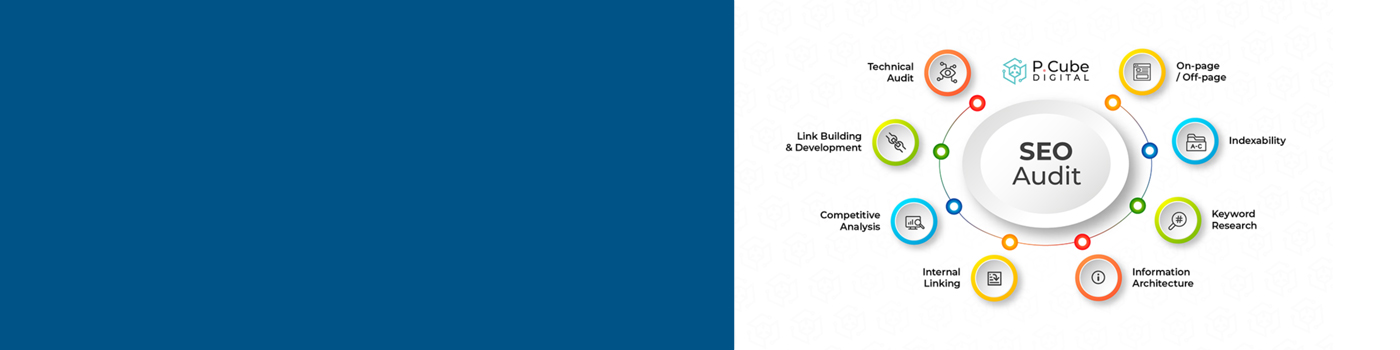
The secret of getting a good position on Google does not only involve great content. You may have the best post but if it is hosted on a slow-loading server, it will not get traffic from Google searches, nor will any user wait for it to load.
Business successes rely on conversions no matter what stage of operation your company currently has. Your upgrading techniques for conversions can boost your ability to capture target clients.
Have you ever had the feeling that your website is the world's largest library hidden? Amazing content has been written, a stunning site has been designed, and you know very well that the information is needed by people. But when you do a Google search for it, it's not there. Annoying, isn't it?

Everybody is familiar with the traditional game of SEO (Search Engine Optimization). First, you do keyword research, then write a post, create some backlinks, and finally pray that Google becomes aware of your existence. It seems like a drive with a map and hoping you wouldn't get missed at any point.
As soon as a Google user clicks to your website a clock starts to tick. If your site is slow or the text keeps moving while the user is reading or the button response at the other end is slow, then the user leaves your site. A single, irritated pressing of the "back" button means you lose traffic, interaction, and possibly even sales.

When you type a question into Google and hit Enter, you're talking to one of the world's smartest computer programs. These computer programs are called search engine algorithms, and they are the secret formula for discovering the most suitable answer out of billions of web pages.
The "Graphic Design is My Passion" meme is a funny internet joke about bad design. It started making fun of poorly designed graphics, but over time, it expanded a lot. People use this meme to joke about cringy, messy, or strange designs. The phrase reads confidently, but when combined with a terrible design, it creates a funny comparison. The meme started on Tumblr in 2014, showing a poorly drawn green frog and ugly text. It has expanded since then, inspiring many copies on the internet.

AI presents an undeniable transformation for the future of SEO by programming routine tasks. It enables researchers to boost keyword analysis and improve content efforts and performance evaluation. Yet, people continue to be essential for interpreting user needs and producing high-quality materials.
The mark of business is always that content marketing remains an ever-changing turf. Keeping track of the trends has to be a crucial factor in ensuring that customers can learn a competitive edge over other businesses. 2026 opens up multiple years for trends emerging forth in creating a new future for content marketing worldwide. For instance, this includes AI personalisation, as well as video and interactive elements.
Your email address will not be published.
Required fields are marked *
 +91-74286 23211